
 Not only has the detection of gravitational waves opened a new era of astronomy, it has also unveiled new horizons for optical and materials sciences. Read more in MRS Bulletin (Vol 41 Issue 10; html)…
 The latest developments and applications of lidar technology reach from the depths of the ocean to outer space. Read more in Electro Optics
  New measurements show how the sinking velocities of organic matter in the water vary with depth, region, and season.
  Streamlined proposal call focuses on aerosol sampling at DOE Atmospheric Radiation Measurement Climate Research Facility site with analysis at Environmental Molecular Sciences Laboratory. Read more
  Forecasters hope to predict strikes months or even years in advance. Read more at
 How high-precision optics enabled detection of gravitational waves and a new view of the universe.
  New materials and innovative synthesis methods address problems with solar cell efficiency and cost.
  DOE User Facility lets postdocs develop expertise in broad-reaching research and applicable techniques. Read more
 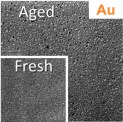 Heat-induced migration of metal contacts is one culprit behind the degradation that plagues otherwise efficient perovskite solar cells.
  Photonics technologies being developed for probing the universe are leading to better commercial products.
 Outlets
- APS Physics (240)
- Berkeley Lab (38)
- Cleantech Concepts (5)
- Encyclopedia of Puget Sound (1)
- Eos (1)
- Europa Science (14)
- IEEE Spectrum (14)
- MRS Bulletin (19)
- Nature (1)
- New Scientist (1)
- Old News (7)
- Pacific Northwest National Lab (8)
- Physics Today (154)
- Physics World (2)
- Science Magazine (16)
- Science News (5)
- Scientific American (30)
- SPIE News (4)
- SPIE Professional (3)
- Tech & Content Writing (5)
- The Scientist (4)
- Travel Writing (4)
- Uncategorized (7)
Topics
- Acoustics
- APS Physics
- Astronomy
- Astrophysics
- Atmospheric Sciences
- Atomic and Molecular Physics
- Batteries
- Berkeley Lab
- Biochemistry
- biology
- Biophysics
- Chemistry
- Climate Change
- Condensed Matter Physics
- Conferences
- Down to Earth
- Earth Sciences
- Ecology
- Electronics
- Energy
- Environment
- Europa Science
- Fluid Dynamics
- Geology
- Geophysics
- IEEE Spectrum
- Lasers
- Machine Learning
- Magnetism
- Materials Sciences
- Medical
- Metamaterials
- Meteorology
- MRS Bulletin
- Nanoscience
- Nuclear Physics
- Oceanography
- Optics
- Photonics
- Physics
- Physics Today
- Plasma physics
- Policy
- Quantum Mechanics
- Quantum Physics
- Scientific American
- Semiconductors
- Soft matter
- Spectroscopy
- Volcanology
 Rachel Berkowitz