
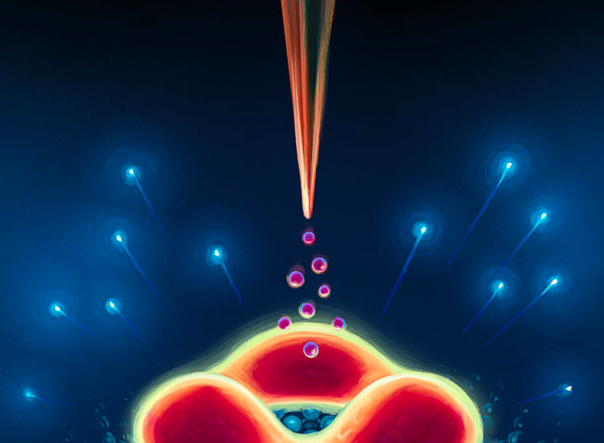
The precisely controlled photon source, made from an atomically thin semiconducting material, could aid the development of advanced quantum communication. Read more at Berkeley Lab…
The precisely controlled photon source, made from an atomically thin semiconducting material, could aid the development of advanced quantum communication. Read more at Berkeley Lab…

Modeling, lab work, and perhaps a mission to the planet will be required to understand the chemical reactions that take place within Venus’s hot, dense, oxidizing cloud layers. Read more in Physics Today…
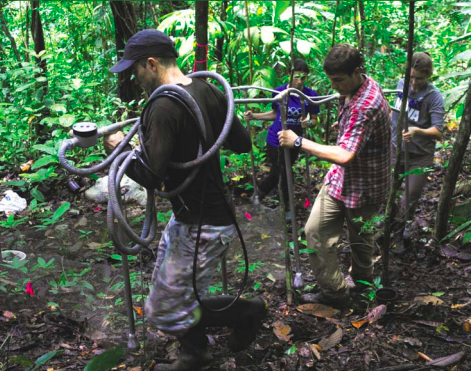
A field study challenges climate simulations by showing increased carbon loss from warmed low latitude soils. Read more in Physics Today…
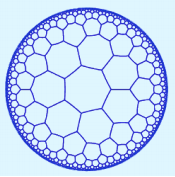
A heptagonal-lattice superconducting circuit, and the mathematics that
describe it, provide tools for studying quantum mechanics in curved
space. Read more in APS Physics…
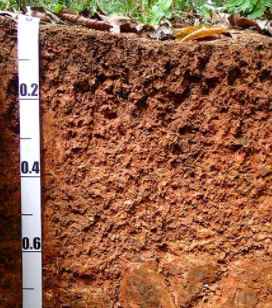 New experiments challenge climate simulations that predict minimal carbon loss from soils in the tropics. Read more in Physics Today…
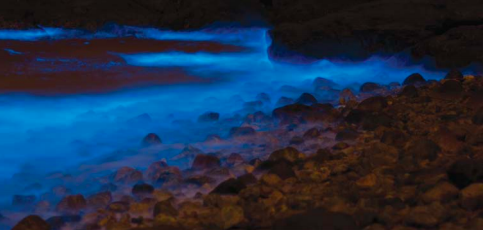
The bioluminescent intensity depends on the rate and amplitude of the micro – organism’s deformation. Read more at Physics Today…
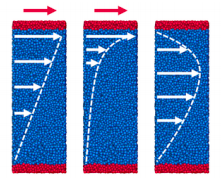
A new model can predict how packed particles move through both 2D and 3D channels. Read more in APS Physics…
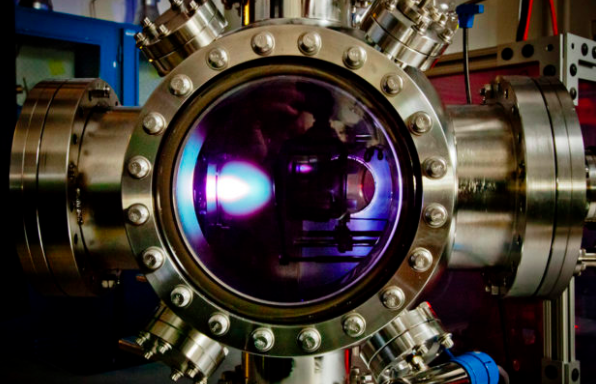 By introducing defects to a common material, Berkeley Lab researchers create a highly efficient capacitor with dramatically increased energy density. Read more at Berkeley Lab…
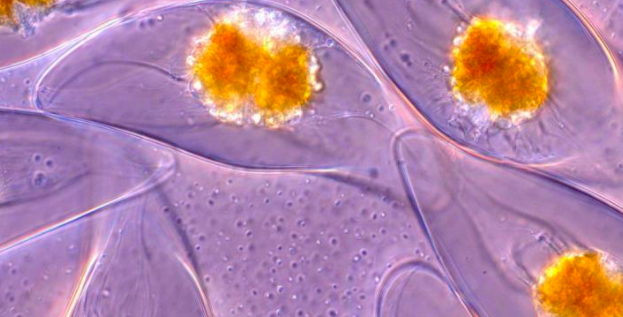 The intensity of bioluminescence depends on the rate and amplitude of the microorganism’s deformation. Read more in Physics Today…
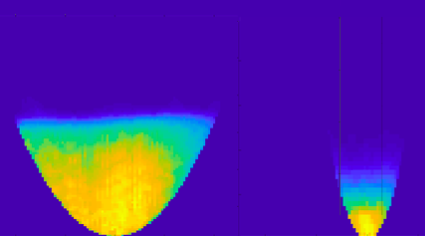 Researchers have generated the coldest electrons to date from solid-state photocathodes, an achievement that could improve electron sources for particle accelerators and ultrafast electron microscopy applications. Read more in APS Physics…
 Rachel Berkowitz