
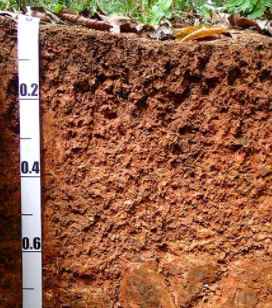
 New experiments challenge climate simulations that predict minimal carbon loss from soils in the tropics. Read more in Physics Today…

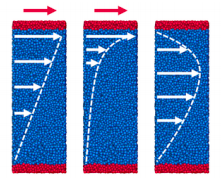
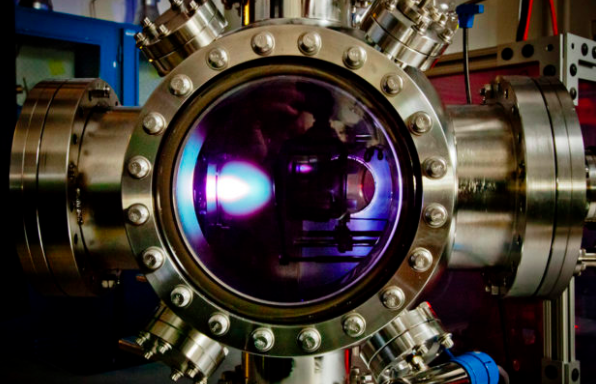 By introducing defects to a common material, Berkeley Lab researchers create a highly efficient capacitor with dramatically increased energy density.
 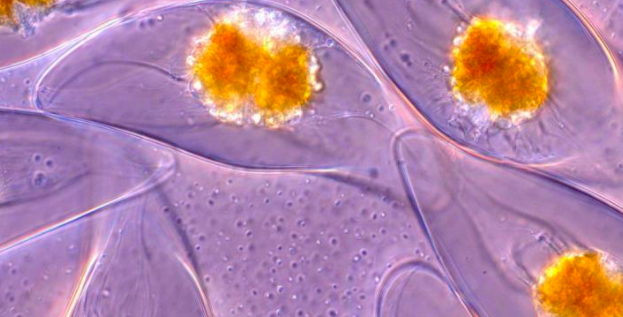 The intensity of bioluminescence depends on the rate and amplitude of the microorganism’s deformation.
 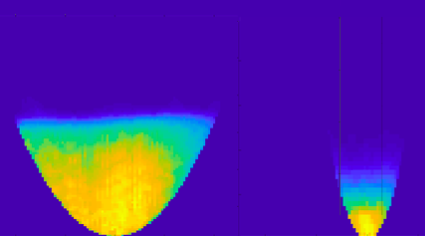 Researchers have generated the coldest electrons to date from solid-state photocathodes, an achievement that could improve electron sources for particle accelerators and ultrafast electron microscopy applications.
 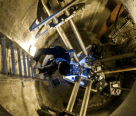 An array of ring lasers provides the first continuous measurement of Earth’s motion from a single location.
 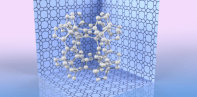 Calculations indicate that a form of carbon synthesized from pentagonal hydrocarbon molecules could have unusual electrical and mechanical properties.
  A new experiment suggests that ammonium nitrate particles nucleate and quickly grow in winter conditions.
 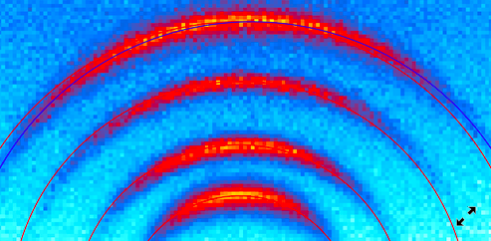 Experiments confirm that photonionized molecules get a backward kick, as predicted by theory.
 Outlets
- APS Physics (240)
- Berkeley Lab (38)
- Cleantech Concepts (5)
- Encyclopedia of Puget Sound (1)
- Eos (1)
- Europa Science (14)
- IEEE Spectrum (14)
- MRS Bulletin (19)
- Nature (1)
- New Scientist (1)
- Old News (7)
- Pacific Northwest National Lab (8)
- Physics Today (154)
- Physics World (2)
- Science Magazine (16)
- Science News (5)
- Scientific American (30)
- SPIE News (4)
- SPIE Professional (3)
- Tech & Content Writing (5)
- The Scientist (4)
- Travel Writing (4)
- Uncategorized (7)
Topics
- Acoustics
- APS Physics
- Astronomy
- Astrophysics
- Atmospheric Sciences
- Atomic and Molecular Physics
- Batteries
- Berkeley Lab
- Biochemistry
- biology
- Biophysics
- Chemistry
- Climate Change
- Condensed Matter Physics
- Conferences
- Down to Earth
- Earth Sciences
- Ecology
- Electronics
- Energy
- Environment
- Europa Science
- Fluid Dynamics
- Geology
- Geophysics
- IEEE Spectrum
- Lasers
- Machine Learning
- Magnetism
- Materials Sciences
- Medical
- Metamaterials
- Meteorology
- MRS Bulletin
- Nanoscience
- Nuclear Physics
- Oceanography
- Optics
- Photonics
- Physics
- Physics Today
- Plasma physics
- Policy
- Quantum Mechanics
- Quantum Physics
- Scientific American
- Semiconductors
- Soft matter
- Spectroscopy
- Volcanology
 Rachel Berkowitz