
 A turbulent, laser-generated plasma can amplify magnetic fields to cosmic scales. Read more in Physics Today (April 2018)…
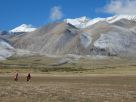 Climate models explore how changes in the Tibetan Plateau’s latitudinal position and elevation may have affected ancient Asia’s climate. Read more in
 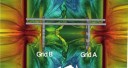 A turbulent, laser-generated plasma can dramatically amplify magnetic fields. Read more in
  A shock collision experiment maps their transition from graphite in real time. Read more in
 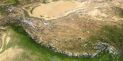 The East Asian monsoon evolved in response to changes in the latitude and elevation of the Tibetan Plateau. Read more in
 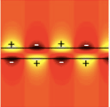 Explaining how to enhance optical forces and control the mechanical deformation in stacks of graphene sheets. Read more in
 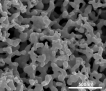 Researchers develop quick and simple alternative synthesis method for porous scaffolds made from noble metal nanoparticles.
  Welding ship hulls is a relatively new application for laser processing, but one where lasers can add great value. Read more in
  Researchers are using light and new image processing tools for label-free cell characterization. Read more in
 Outlets
- APS Physics (237)
- Berkeley Lab (37)
- Cleantech Concepts (5)
- Encyclopedia of Puget Sound (1)
- Eos (1)
- Europa Science (14)
- IEEE Spectrum (13)
- MRS Bulletin (19)
- Nature (1)
- New Scientist (1)
- Old News (7)
- Pacific Northwest National Lab (8)
- Physics Today (154)
- Physics World (2)
- Science Magazine (16)
- Science News (4)
- Scientific American (30)
- SPIE News (4)
- SPIE Professional (3)
- Tech & Content Writing (5)
- The Scientist (4)
- Travel Writing (4)
- Uncategorized (7)
Topics
- Acoustics
- APS Physics
- Astronomy
- Astrophysics
- Atmospheric Sciences
- Atomic and Molecular Physics
- Batteries
- Berkeley Lab
- Biochemistry
- biology
- Biophysics
- Chemistry
- Climate Change
- Condensed Matter Physics
- Conferences
- Down to Earth
- Earth Sciences
- Ecology
- Electronics
- Energy
- Environment
- Europa Science
- Fluid Dynamics
- Geology
- Geophysics
- IEEE Spectrum
- Lasers
- Machine Learning
- Magnetism
- Materials Sciences
- Medical
- Metamaterials
- Meteorology
- MRS Bulletin
- Nanoscience
- Nuclear Physics
- Oceanography
- Optics
- Photonics
- Physics
- Physics Today
- Plasma physics
- Policy
- Quantum Mechanics
- Quantum Physics
- Scientific American
- Semiconductors
- Soft matter
- Spectroscopy
- Volcanology
 Rachel Berkowitz