
 A predicted phase transition shows up in high-pressure experiments. Read more in Physics Today…
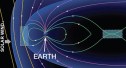 In situ measurements capture a nonturbulent, efficient reconnection event on Earth’s nightside. Read more in
  aminar electron dynamics drive reconnection on the side of Earth away from the Sun.
 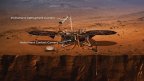 e look forward to learning more about Mars as InSight’s scientific operations commence. Read more at
  Optical tweezers have endured as an invaluable laboratory tool for manipulating molecules and other small particles. Read more in
  The new technology can identify proteins that distinguish healthy cells from diseased ones. Read more in
  A novel technique can predict foggy conditions an hour before they appear. Read more in
  Gaseous hydrocarbons may cluster into sooty particles through a chain reaction.
  Gaseous hydrocarbons may cluster into soot through a chain reaction. Read more in
  In a confined environment, ants divide labor to optimize nest excavation.
 Outlets
- APS Physics (240)
- Berkeley Lab (38)
- Cleantech Concepts (5)
- Encyclopedia of Puget Sound (1)
- Eos (1)
- Europa Science (14)
- IEEE Spectrum (14)
- MRS Bulletin (19)
- Nature (1)
- New Scientist (1)
- Old News (7)
- Pacific Northwest National Lab (8)
- Physics Today (154)
- Physics World (2)
- Science Magazine (16)
- Science News (5)
- Scientific American (30)
- SPIE News (4)
- SPIE Professional (3)
- Tech & Content Writing (5)
- The Scientist (4)
- Travel Writing (4)
- Uncategorized (7)
Topics
- Acoustics
- APS Physics
- Astronomy
- Astrophysics
- Atmospheric Sciences
- Atomic and Molecular Physics
- Batteries
- Berkeley Lab
- Biochemistry
- biology
- Biophysics
- Chemistry
- Climate Change
- Condensed Matter Physics
- Conferences
- Down to Earth
- Earth Sciences
- Ecology
- Electronics
- Energy
- Environment
- Europa Science
- Fluid Dynamics
- Geology
- Geophysics
- IEEE Spectrum
- Lasers
- Machine Learning
- Magnetism
- Materials Sciences
- Medical
- Metamaterials
- Meteorology
- MRS Bulletin
- Nanoscience
- Nuclear Physics
- Oceanography
- Optics
- Photonics
- Physics
- Physics Today
- Plasma physics
- Policy
- Quantum Mechanics
- Quantum Physics
- Scientific American
- Semiconductors
- Soft matter
- Spectroscopy
- Volcanology
 Rachel Berkowitz