
 With its higher-than-expected propensity to capture electrons, neon could drive some stars’ thermonuclear death. Read more in Physics Today…
 Enhancing biological and renewable energy research by developing advanced molecular imaging capabilities.
  High-frequency audibility is singled out as essential for comprehension in crowded settings.
 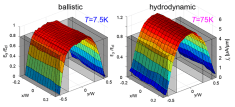 A new imaging technique captures the characteristic hydrodynamic flow profile.
  Piston-like caldera collapses drove episodic lava flows far from the summit.
 A calculation shows that an elusive, isolated quantum time crystal may not be far from reality.
 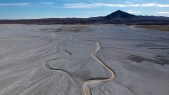 Rivers in unvegetated landscapes migrate an order of magnitude faster than their vegetated counterparts.
  The latest approaches toward developing batteries with higher energy density for electric vehicles and other applications.
 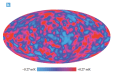 James Peebles developed a mathematical framework that describes how the universe evolved. Decades of empirical evidence later, it still holds up.
 Outlets
- APS Physics (240)
- Berkeley Lab (38)
- Cleantech Concepts (5)
- Encyclopedia of Puget Sound (1)
- Eos (1)
- Europa Science (14)
- IEEE Spectrum (14)
- MRS Bulletin (19)
- Nature (1)
- New Scientist (1)
- Old News (7)
- Pacific Northwest National Lab (8)
- Physics Today (154)
- Physics World (2)
- Science Magazine (16)
- Science News (5)
- Scientific American (30)
- SPIE News (4)
- SPIE Professional (3)
- Tech & Content Writing (5)
- The Scientist (4)
- Travel Writing (4)
- Uncategorized (7)
Topics
- Acoustics
- APS Physics
- Astronomy
- Astrophysics
- Atmospheric Sciences
- Atomic and Molecular Physics
- Batteries
- Berkeley Lab
- Biochemistry
- biology
- Biophysics
- Chemistry
- Climate Change
- Condensed Matter Physics
- Conferences
- Down to Earth
- Earth Sciences
- Ecology
- Electronics
- Energy
- Environment
- Europa Science
- Fluid Dynamics
- Geology
- Geophysics
- IEEE Spectrum
- Lasers
- Machine Learning
- Magnetism
- Materials Sciences
- Medical
- Metamaterials
- Meteorology
- MRS Bulletin
- Nanoscience
- Nuclear Physics
- Oceanography
- Optics
- Photonics
- Physics
- Physics Today
- Plasma physics
- Policy
- Quantum Mechanics
- Quantum Physics
- Scientific American
- Semiconductors
- Soft matter
- Spectroscopy
- Volcanology
 Rachel Berkowitz